Search This Blog

Showing posts with label Transmedia. Show all posts

Monday, May 14, 2012

Fuel and McDonald’s launch kids virtual world » Kidscreen

Media_httpkidscreenco_bdbea

By Jeremy Dickson

Excerpt:

"Ottawa, Canada and L.A.-based youth digital brand builder Fuel and its partner McDonald’s Europe have announced the official launch of their free kids’ virtual world Happy Studio, an online media experience based on the fun of Happy Meals.

The site, which already has 1.8 million registered users since a beta version launched in August 2011, and can also be accessed through mobile devices, includes interactive and educational games and fun activities featuring many licensed characters from McDonald’s Happy Meals and a range of entertainment IPs (Tom and Jerry, Tin Tin, Puss N Boots)...."

Read more: http://kidscreen.com/2012/05/10/fuel-and-mcdonalds-launch-kids-virtual-world/...

Posted via email from Siobhan O'Flynn's 1001 Tales

Transmedia producer Jackie Turnure (Fourth Wall Studios): Podcast: In the History-Makin’ Business | StoryForward Podcast

Podcast: Play in new window | Download

Jackie Turnure

Veteran transmedia producer Jackie Turnure (Fourth Wall Studios) joins J.C. and Steve in this jam-packed episode. Their discussion spans her past Alternate Reality Game projects for LOST, Flash Forward, Salt and more, and leads up to an in-depth conversation about Fourth Wall Studios’ just-released project, Dirty Work and their new transmedia platform, RIDES. Jackie talks about what makes Dirty Work different, and the unique challenges that a transmedia entertainment studio faces.

Subscribe to the StoryForward podcast through this link or via iTunes. Stop by our website where you can find links to contact us with your tips, suggestions, concerns and submissions.

Posted via email from Siobhan O'Flynn's 1001 Tales

Wednesday, February 16, 2011

Henry Jenkins: Announcing Transmedia, Hollywood 2: Visual Culture and Design Conference

Check Henry Jenkins' blog for full deets on the conference:

TRANSMEDIA, HOLLYWOOD 2:
Visual Culture and Design

A UCLA/USC/Industry Symposium
Co-sponsored by
UCLA Producers Program,
UCLA School of Theater, Film, and Television
and
USC School of Cinematic Arts

Friday, April 8, 2011
James Bridges Theater, UCLA School of Theater, Film, and Television
9:45 AM - 7 PM

Event Co-Directors:
Denise Mann, Associate Professor, Producers Program, UCLA School of Theater, Film and Television

Henry Jenkins, Provost's Professor of Communication, Journalism and Cinematic Arts, USC Annenberg School of Communication

Posted via email from Siobhan O'Flynn's 1001 Tales

Sunday, January 30, 2011

Grazie Henry Jenkins!: "Deep Media," Transmedia, What's the Difference?: An Interview with Frank Rose (Part One)

Excerpt from the Jan. 26, 2011 interview:

HJ: "You write in the book about what you call "deep media." What do you see as the core characteristics of deep media? How do you see your concept relating to others being deployed right now such as transmedia or crossmedia?

FR: To me it's mainly a question of emphasis. Are we focusing on the process or the goal? Transmedia, or crossmedia, puts the emphasis on a new process of storytelling: How do you tell a story across a variety of different media? Deep media puts the focus on the goal: To enable members of the audience (for want of a better term) to delve into a story at any level of depth they like, to immerse themselves in it. Not that this was fully thought out when I started--the term was suggested by a friend in late 2008 as a name for my blog, and when I looked it up online I saw that it had been used by people like Nigel Hollis, the chief analyst at Millward Brown, so I adopted it.
That said, I think the terms are more or less interchangeable. I certainly subscribe to the seven core concepts of transmedia as you've laid them out. I also think we're at an incredibly transitional point in our culture, and terms like "deep media" and "transmedia" are needed to describe a still-evolving way of telling stories. I wouldn't be entirely surprised if both terms disappeared in 15-20 years as this form of storytelling becomes ubiquitous and ultimately taken for granted...."

Read the full interview on Henry Jenkins' blog:

http://henryjenkins.org/2011/01/deep_media_transmedia_whats_th.html

Posted via email from Siobhan O'Flynn's 1001 Tales

Thursday, November 11, 2010

A Peek Behind Previously Closed Doors with Power to the Pixel | ARGNet: Alternate Reality Gaming Network

Unless you’ve presented a slide deck to potential production partners and financiers, the process of pitching a transmedia property probably seems like a foreign concept. Since 2007, Power to the Pixel’s Cross-Media Forum has sought to make this process more transparent. The centerpiece of the conference was The Pixel Pitch, where nine transmedia projects were pitched in an open forum before a jury of decision-makers, commissioners, and industry executives with a £6,000 prize on the line.

Michel Reilhac, the Executive Director of ARTE France Cinéma, gave the first of two keynotes kicking off Power to the Pixel’s Cross-Media Forum on October 12, discussing The Game-ification of Life. In his keynote, Reilhac recognized that the ubiquity of gaming culture is a reality that cannot be ignored in storytelling and experience design.

Reilhac traces the gamification of life through cash incentive, loyalty, and status reward systems. He notes that in gaming culture, the status / bragging mechanic is the most powerful tool for interaction, citing the prestige of having a platinum airline mileage card, earning Foursquare badges, and gaining social equity through Twitter followers as examples. Just as players turn to games to satisfy different motivations, transmedia participants seek different methods of interacting with stories. Specifically addressing alternate reality games, Reihlac celebrates the genre’s ability to empower players, not through an avatar, but as themselves. Alternate reality games engender trust that extends beyond the game and into the real world.

The second keynote was delivered by Campfire Media’s Mike Monello with the alliterative title Babies, Buns and Buzzers, a historical look at the last century of experiential entertainment told through the framework of Coney Island, and running through an ARGFest-spawned obsession with tiki bars (along with a brief mention of Campfire’s work, including the multi-platform viral campaign leading up to author Andrea Cremer’s Nightshade).

Monello explains that in his mind, “transmedia is not just a buzzword. It’s…the form of story that’s closest to how we perceive the world.” He hearkens back to early examples of experience design with George Tilyou’s death-trap experience design at Coney Island, where lines would be longer the day after a ride killed somebody. Monello noted that “Blowhole Theater” viewing platforms were key factors of the experience, where men were assaulted with electric prods and women were pushed over blowholes for the edification of an excited audience. Reiterating Tilyou’s philosophy, Monello explained that “customers would pay for the privilege of entertaining other customers, and that people liked seeing shows, but they liked seeing other people more.” Monello continued discussing elements of design through other Coney Island fixtures: baby incubators that helped make the issue of premature birth tangible; Nathan’s hot dog stand’s launch fostering self-discovery; and culminating in The Tingler, a horror film wired with buzzers.

Read full post on argn.com

Posted via email from Siobhan O'Flynn's 1001 Tales

Saturday, October 9, 2010

This looks like Transmedia Fun! Canadian Comic Book Combines Multiple Tech Platforms

Source: http://whatsyourtech.ca/2010/10/09/canadian-comic-book-combines-multiple-tech-platforms/

by Lee Rickwood on October 9, 201

In the city that never sleeps, it may seem like overkill.

But for the rest of the planet, today is a wake-up call from the digital future.

It’s the first launch of its kind, as Canadians unveil Are You Awake at Comic Con in New York City this weekend.

Are You Awake is going to slap you across the face and open your eyes wide to transmedia, where digital technology and interactive storytelling get mashed up into something totally new and totally cool.

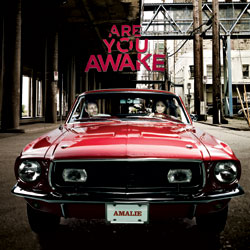
AYA is a glamour-noir detective thriller with a multimedia twist, incorporating live action webisodes, a graphic novel, motion comics, original MP3s and even a new fashion line.

are you awake still image

Live Actions in Transmedia Project

But the mystery and its back-story really come to life through smartphone applications, social media feeds and geo-locating tools.

Some 50,000 fans are expected at Comic Con, and they will get a 32-page mixed reality comic book that contains cleverly embedded clues. Solving the mystery means going online and using digital applications developed by Zeroes2Heroes Media out in Vancouver, B.C.

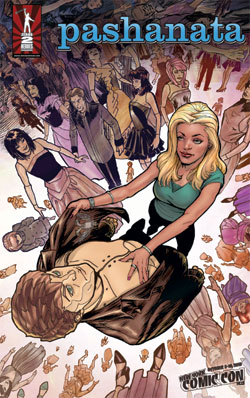
The story – really a cross-continent search for a mysterious man who holds the key to a series of disturbing dreams with real-world repercussions for the romantically involved lead characters – uses both surrealistic and supernatural elements, and the comic itself features sexy, stylish artwork by DC and Marvel Comics legend Richard Pace.

Enjoy the comic, for sure, but make sure you have a smartphone handy to get even more from the page it’s printed on.

For example, iPhone users can download an Are You Awake app that unlocks clues about the deepening mystery. Then, by pointing the camera lens at individual comic panels in the book, new images and sounds are played on screen.

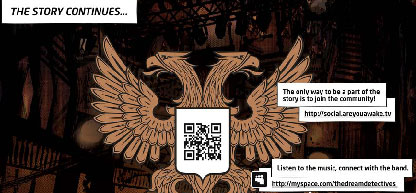
BlackBerries can be used to get similar story material, too, by pointing the device at QR (quick response) codes, square little black and white graphic icons that interactively trigger content delivery.

The more clues someone gathers about the mystery, the deeper they can go into the story and the social network of digital properties that support it.

quick response codes shown in comic book

QR Codes Bring Quick Response When Scanned by Smartphone

Beyond New York Comic Con, fans can continue following the story and its characters through an extended alternate reality game on Facebook, Twitter, MySpace, YouTube and other social media channels.

“There’s a constellation of digital properties supporting and advancing the storyline,” explains Matt Toner, president of Zeroes 2 Heroes Media. “Some are just Twitter feeds, some are more elaborate. They are all little explosions, little pushes to get people moving, things they can grow into as they follow the story and learn more about the characters in it.”

And there is an online help centre for people who get stuck in the game, as people will, because audience involvement and direct engagement in the story is the name of the transmedia game.

The term itself was coined a few years ago by media instructor and commentator Henry Jenkins to describe the interactive, audience driven elements of storytelling that digital media platforms and online networking make possible.

More than just technology, transmedia takes guts and confidence for a story developer to let go.

Are You Awake is the creation of Keith Turner, a very successful Canadian investment banker turned author, songwriter and radio host. Keith is the Executive Producer, too, but he’s willing to let his baby walk on its own, as any transmedia producer must, so that the plot or the characters can be steered and influenced by the audience.

It often means that the original story must be revised or revamped based on new input and interaction.

Detail from Comic Book Cover Art

Cover Artwork Detail from Are You Awake Comic Book

That’s cool, says Turner, who wants to engage fans “Not only with great entertainment, but also by giving them an active role in future story and media development.”

He gives kudos to the crew at Zeros 2 Heroes, and how they’ve developed a multi-platform audience experience that goes to a whole new level through the creative use of social media, mobile apps and unique concepts like a mixed reality comic.

As Matt puts it, despite the highly technical nature of a multi-platform transmedia project like this, “Really, we are tech agnostic. We don’t care what tech solution is used, as long as it accomplishes the goals.”

From Foursquare to 1-800 numbers, from live actors to computer animation, from PCs to cellphones, Are You Awake is making use of as many platforms as possible.

And it may just find its way to TV if things go according to plan.

This decidedly ‘non-Hollywood’ production will in fact feature a “who’s who” of genre entertainment stars on its website, and in live action sequences, including Ryan Robbins (Sanctuary, Stargate: Atlantis), Alana Husband (Intelligence, The L Word), Jessica Harmon (Battlestar Galactica: The Face of the Enemy) and Michael Eklund (Caprica, Shattered) .

The series’ online trailer is also being released this weekend, at www.areyouawake.tv.

* * *

So, are you awake?

What’s your tech, and how will you use it to solve this mystery?

Posted via email from Siobhan O'Flynn's 1001 Tales

Thursday, September 23, 2010

Best Transmedia 'discrete: subtle: organic' YES!: Post from Storycentral Digital on 'Transmedia Transmafia? hype & hyperbole or buzz and b******t'

Transmedia Transmafia? hype & hyperbole or buzz and b******t

19 09 2010

There seems so be some confusion on Twitter lately about transmedia, what it actually IS and WHY it’s so important and the RT’s are coming thick and fast…

andresfox said, “@storycentral who cares about #transmedia an convergence culture, it is just a trend subject?

helionetto asked “Transmedia Storytelling? WTF?”

and fakebaldur stated, “I hate the word ‘transmedia‘. It’s an overblown, pretentious and self-indulgent buzzword. It’s hypertext, damn it. Just like everything else” and followed up with the only difference between ‘transmedia‘ and ‘hypertext’ is in the amount of hyperbole, gas and hot air being emitted”.

And they all have a valid point.

Transmedia is in danger of becoming a buzz word (if it isn’t already).   And never mind about the PGA accrediting the term ‘transmedia‘ – I’ve checked 3 online dictionaries to find that the word isn’t even acknowledged by the English language yet!

So, going back to our Twitterers, they have a point.  What IS transmedia?

A noun? A name of something?

transmedia /tra:ns, -nz  mi:dia (noun) (commonly used as a mass noun with a singular verb)

or is it more of a verb? An experience, something you ‘do’?

transmedia /tra:ns, -nz  mi:dia (verb)

Either way, it’s in danger of becoming a victim of its own success because of the buzz.  In the same way that anything that is overly hyped without amy commercial evidence of success, transmedia is being talked about a lot, but showcased very little in the public/commercial domain.

The amount of ‘transmedia producers’ that are popping up all over web 2.0 on a daily basis astound me!  I’ve been researching Transmedia Storytelling for nearly 2 years now for my PhD and still wouldn’t really consider myself a fully fledged ‘producer’ – doesn’t that come with experience over time?   I was recently invited to be a guest at Seize The Media’s Transmedia NEXT 3-day workshop there were delegates already working on transmedia projects and yet, it seems the hype, the analysis and the buzz are still bigger than the sum of it’s parts.

I feel the confusion is possibly because of the lack of commercial transmedia experiences.  Go to your local pub, wine bar, coffee shop or school gates and ask who knows about The Art of the Heist, The Truth About Marika or Head Trauma.  Check out who’s aware of Cathy’s Book or Level 26.

I can see the blank expresssions already.

That’s my point.

The fabulous transmedia projects are still relatively ‘niche’ – still firmly rooted in ARGs and are so subtley rolled out, so fabulously supported by a strong architecture of strategy and knowledge of audience behaviours, that they aren’t trumpeted about as ‘The Next Transmedia Project’.

They are discrete.

Subtle.

Organic.

I am pointed toward ‘new’ transmedia experiences on a weekly basis, often accompanied with a PDF or some kind of instructions offering ‘how to enjoy this transmedia experience. Click here to find out HOW’.  Isn’t that like taking years to build a maze, only to supply a map?

One of the huge challenges of scripting and storybibling great transmedia lies in the triggers that move audience from platform to platform seamlessly.  There’s heaps of analysis out there looking at audience behaviors, UX, UI, platforms, primary platforms and narratives and how they all mix into the pot of creating great transmedia.  The fact is that a transmedia experience will naturally move audience, progressing them across platforms – with relevance and almost subconsciously.

The viewers/participants who entered The Art of the Heist by seeing the CCTV ‘footage’ of the Audi being stolen naturally weren’t surprised to see it reported in newspapers, featuring in car magazines.  ‘Players’ who first came across the blog site of characters in The Art of the Heist were drawn to engage with the experience through blog links and might have came across the CCTV footage later.  The point is, at no stage was a ‘map’ supplied.  At no time was the magic blitzed by heralding this as a transmedia experience.

The difficulty, the challenge, the toughest part of scripting great, successful transmedia IS the moving of audience from platform to platform without them knowing and BECAUSE THEY WANT TO. If you’re going to cut into manhours, resources and budget to create a great transmedia experience it should stand on it’s own BECAUSE IT CAN and needs no maps or promotion as a ‘transmedia’ experience.

That just throws cold water all over it.

So, in an attempt to reply to

andresfox who said, “@storycentral who cares about #transmedia an convergence culture, it is just a trend subject? I replied, “nobody necessarily. Depends on franchise, but can expand audience reach, spreadibility & engagement. Tell me more!…”

fakebaldur who stated, “I hate the word ‘transmedia‘. It’s an overblown, pretentious and self-indulgent buzzword. It’s hypertext, damn it. Just like everything else” and followed up with the only difference between ‘transmedia‘ and ‘hypertext’ is in the amount of hyperbole, gas and hot air being emitted”, I suggested, “re #transmedia – lots of hot air, but you gotta scratch the surface to see the value. Not just buzz – ace when done right!”

and I think for helionetto who asked “Transmedia Storytelling? WTF?”  I’ll point in the direction of the fab transmedia examples I’ve just mentioned.

Possibly related posts: (automatically generated)

Posted via email from Siobhan O'Flynn's 1001 Tales

Saturday, September 18, 2010

This is such a good post from Christy Dena - I am entirely with you on this! Going Indie for Meaningfulness and Money

For me, what is needed to promote story in transmedia projects are practitioners who have something to say in this world. Many transmedia projects are mere engines for plots and characters that aren’t meaningful. Transmedia needs more practitioners to use the form to express highly personal or different visions of the world.

Read the full text:

http://www.igda.org/newsletter/?p=352

Posted via email from Siobhan O'Flynn's 1001 Tales

Thursday, September 2, 2010

You Suck at Transmedia posts on Case Study Videos- thanks for organizing! Transmedia Trailers

IN Ontario Transmedia panel-mate! Trans-Canada transmedia: Christopher Bolton’s multi-platform search for identity, sound, and story « Culture Hacker

I'm looking forward to being on a panel on Transmedia Storytelling at IN Ontario with Christopher Bolton, Kat Cizek, & Andrea Nemtin!

Tues. Sept. 14, 10:45-11:45

Excerpt from a piece by Jeff Watson on Culture Hacker/WorkBook Project:

Trans-Canada transmedia: Christopher Bolton’s multi-platform search for identity, sound, and story

"Christopher Bolton is a Canadian writer, producer, and actor, best known for his award-winning comedy series, Rent-a-Goalie. A few months ago, Christopher — AKA “Bolts” — contacted me asking for feedback on his latest project’s transmedia strategy. After a few minutes of chit-chat and an exchange of development documents, I realized that the project, a comedic exploration of Canadian landscapes popular and physical, entitled In Search of Gordon Lightfoot, was much more than a TV series with a few transmedia extensions tacked on just for the hell of it; no, this was something different, something much more integrated — transmedia from the get-go. And, as it happens, it was also something that sounded quite funny and more than a little community-minded in its direct engagement with audiences and Canuck mythology. Naturally, I wanted to be a part of it. A few web chats later, we came to an agreement — I would consult on the project and shadow Christopher as he worked his way through the development process, and in return he would share what he learned with me, here, in the form of a series of interviews."

Posted via email from Siobhan O'Flynn's 1001 Tales